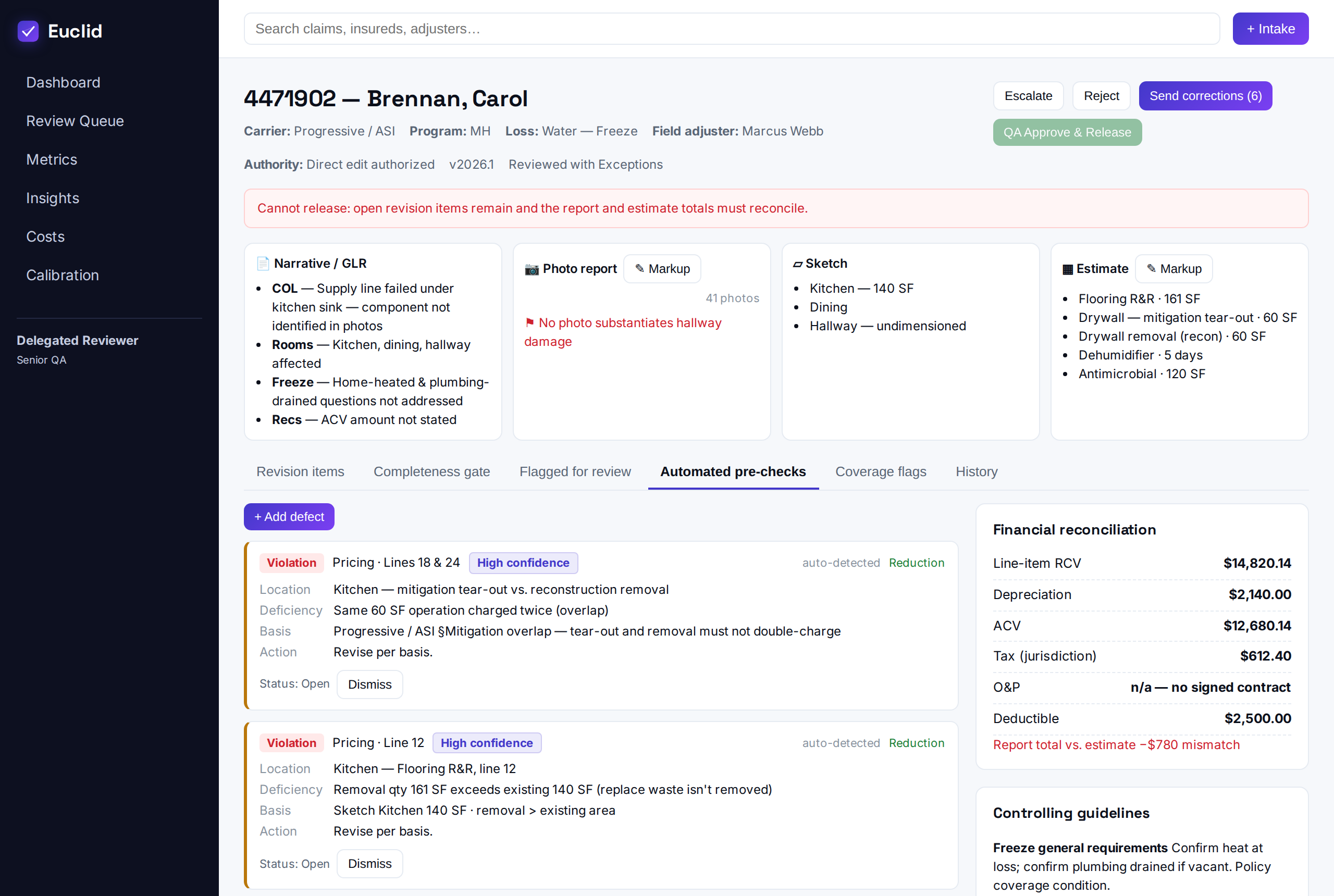
Euclid runs the QA sweep first — confidence-graded flags, carrier-specific rules, every finding traceable — so adjusters fix issues before the file comes back, and reviewers triage instead of hunting.
Every file kicked back for rework is a cycle of rewrites, re-reviews and delay. Manual QA hunts each file from scratch — and still misses things that come back later.
A kicked-back file restarts the loop — adjuster edits, re-submits, reviewer re-reads. Days lost per cycle.
Reviewers read every file cold, applying carrier rules from memory. Slow, and inconsistent across a team.
The issue that slips the first pass surfaces downstream — in a supplement, an audit, or a complaint.
Euclid does the first pass and hands you a ranked list — you stay in control of every call.
Point Euclid at the file — estimate, photos, GLR, DEC sheet. It loads the claim and its carrier's rules.
The engine flags issues against carrier-specific guidelines and grades each one high, medium or low confidence.
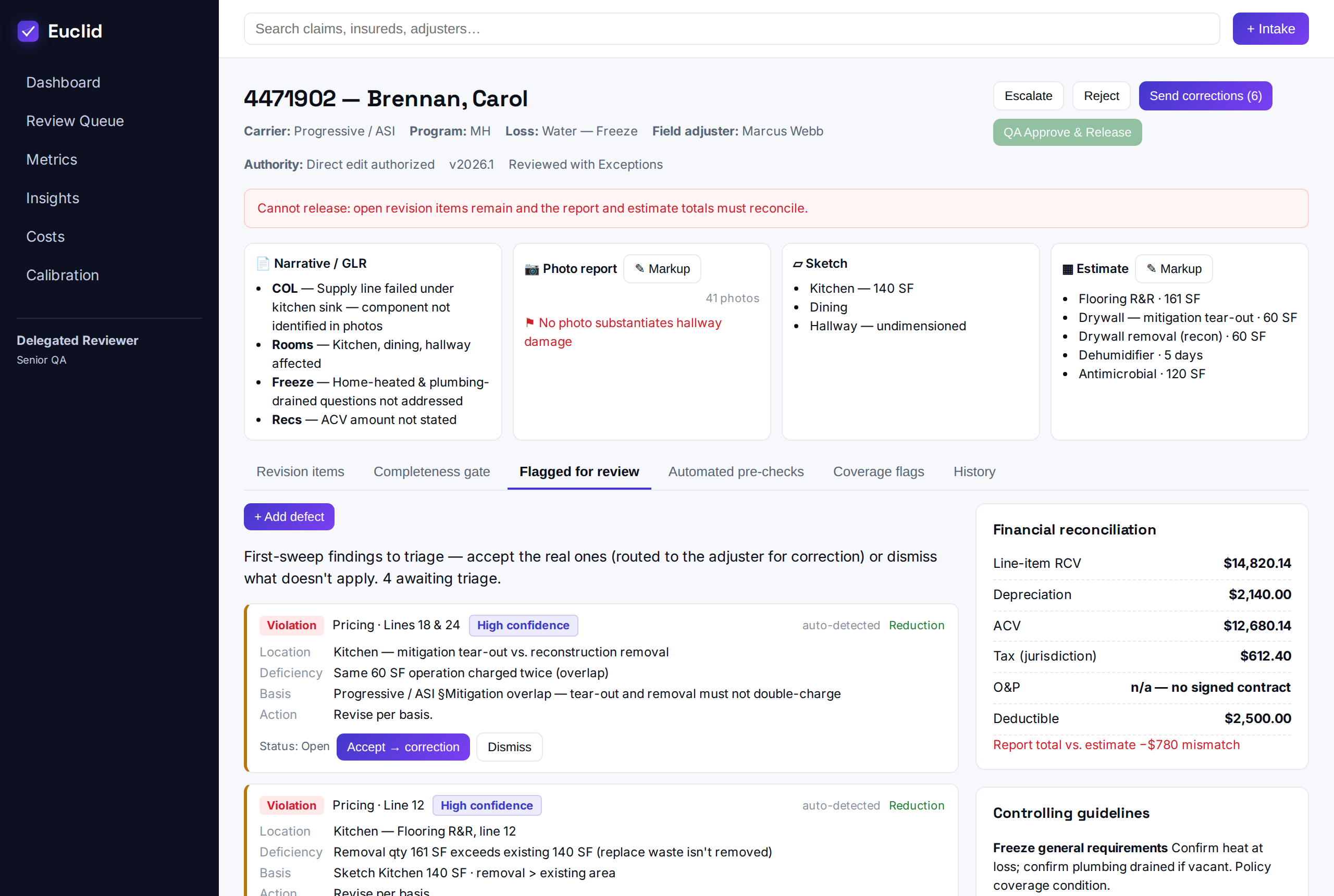
Work a ranked list — accept the real ones for correction, dismiss what doesn't apply. Every finding is explained.
Not a flat checklist. Euclid ranks every flag and badges it high, medium or low confidence — so attention goes where it counts. Each one shows the rule it came from and why it fired.

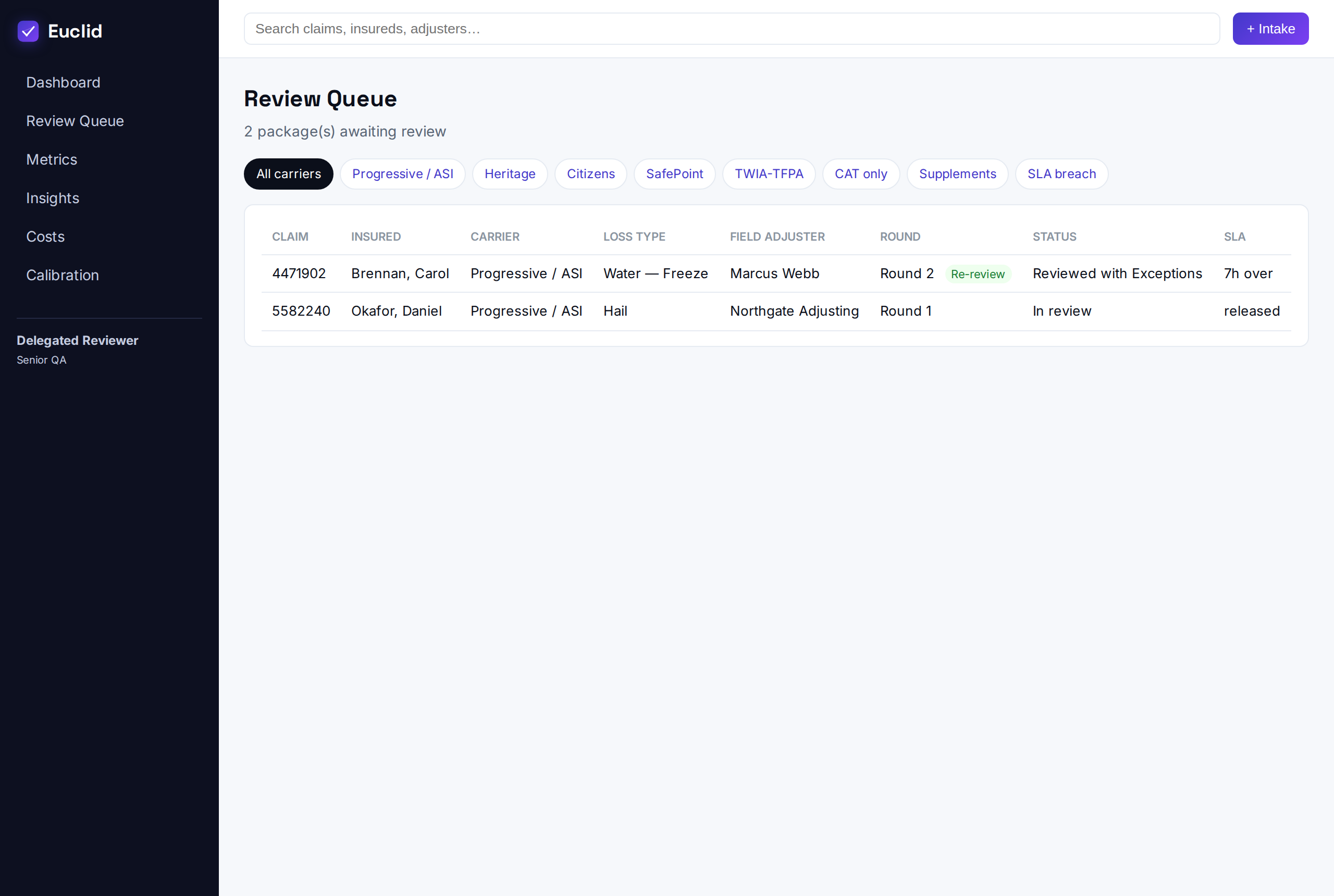
Reviewers open a "Flagged for review" list instead of a blank file. Accept the real issues — they're routed to the adjuster for correction — and dismiss the rest. Read-only roles stay read-only.

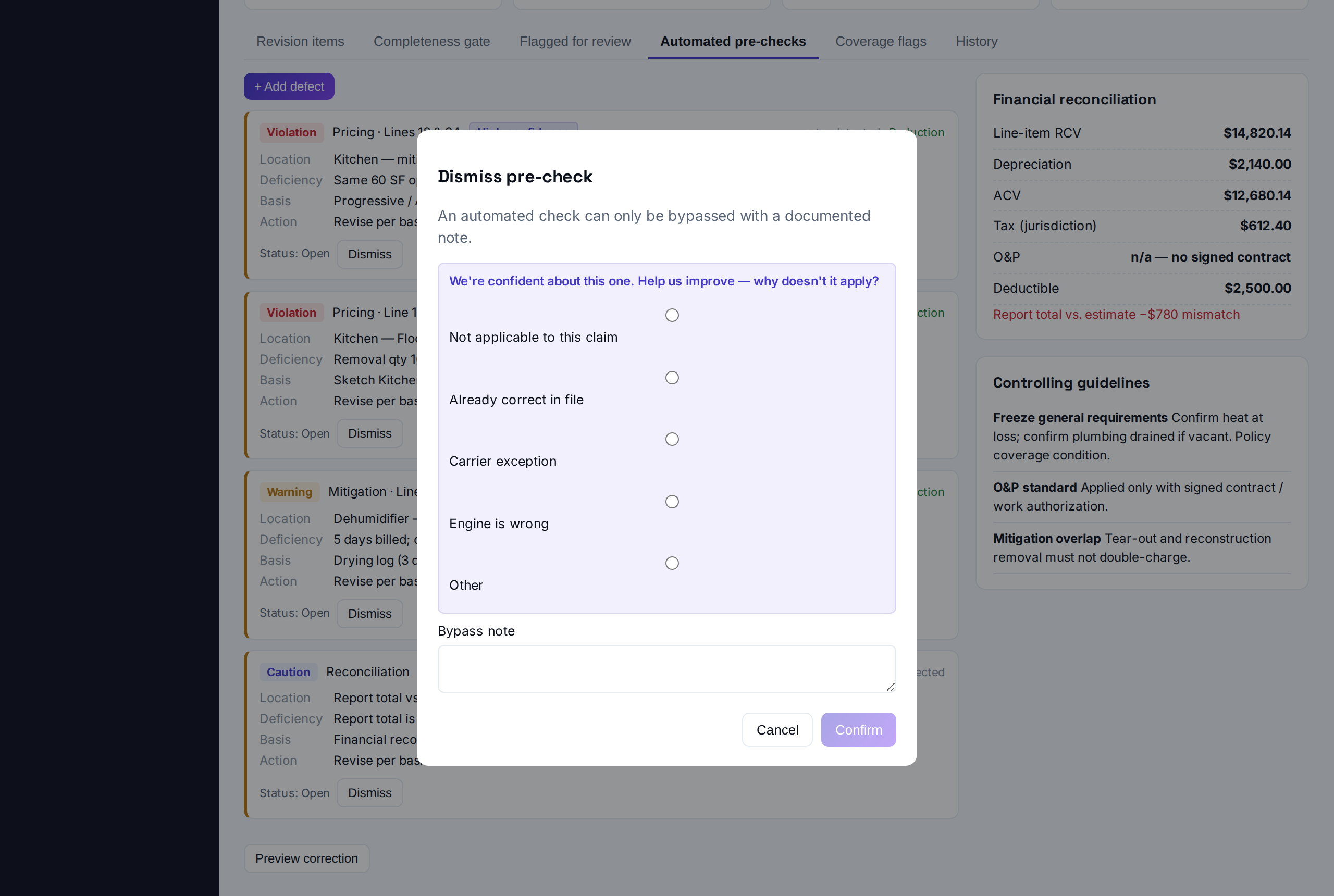
When someone dismisses a flag we're confident about, Euclid asks why — capturing the signal that sharpens precision. A frequency governor means heavy dismissers aren't pestered, and anyone can snooze it.

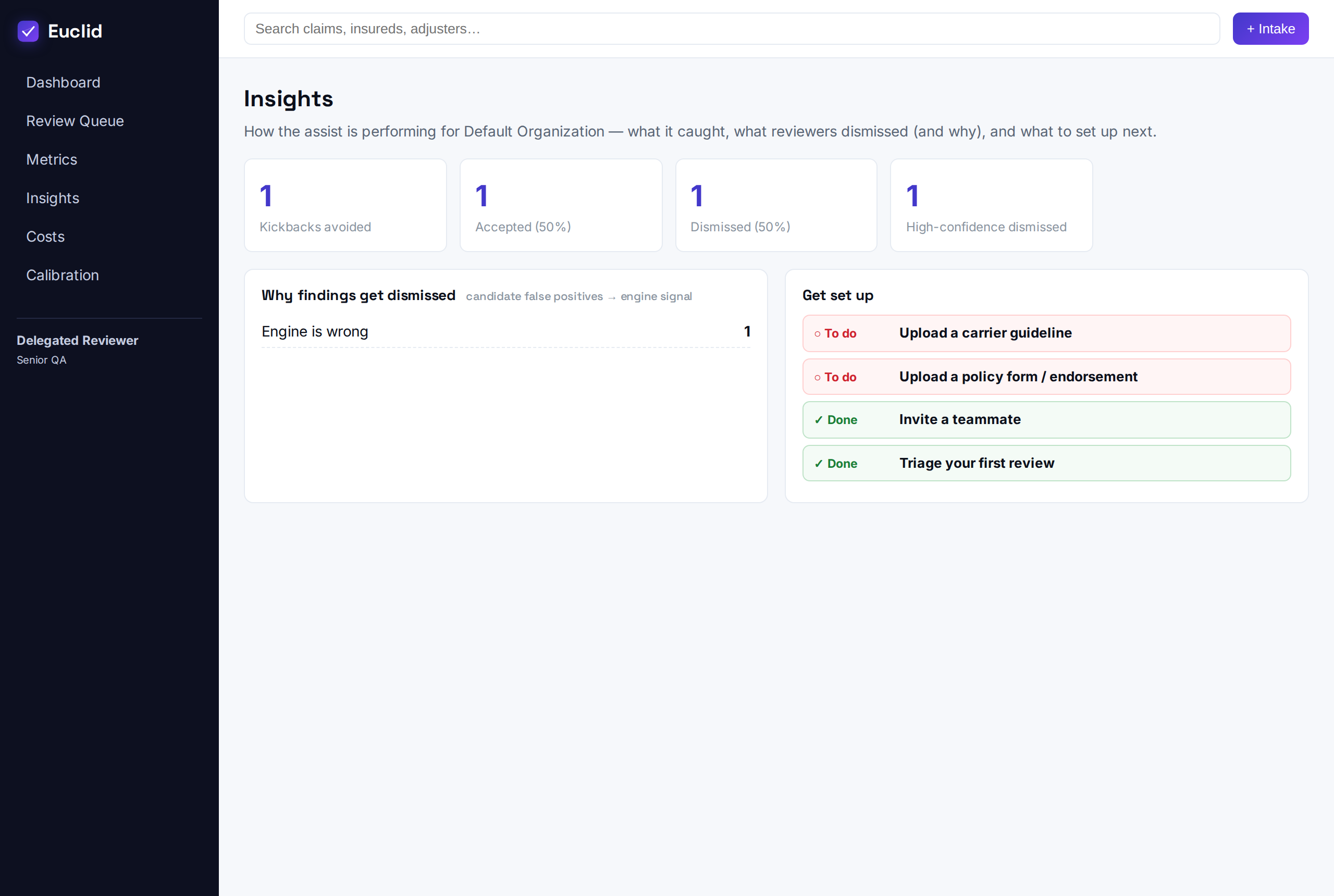
Insights turns dispositions into signal: kickbacks avoided, accept and dismiss rates, and the reasons findings get dismissed — the candidate false positives that drive the engine forward. Plus an onboarding checklist for new teams.

Euclid meets adjusters and reviewers where they are — same engine, role-appropriate surface.
During your own review, Euclid shows the issues a QA reviewer would raise — graded by confidence, framed as help. Dismiss anything; we'll only ask why on the ones we're sure about. Fewer kickbacks, less rework.
Open a ranked list of pre-flagged findings instead of a cold file. Accept the real ones for correction or route them back to the adjuster, dismiss the noise. The first sweep is done — you do the judgment.
Every finding is rated high, medium or low — not a flat checklist, so attention goes where it counts.
Per-carrier guidelines, forms and endorsements drive every review — accuracy tuned to who you write for.
Every flag is explained and dismissible, and every decision is audited. Euclid assists — it never overrides.
Run your first 10 reviews with no card. Add a plan when you're ready to roll it out.
No credit card
Evaluate Euclid on your own real files.
or $10k billed annually
For independent adjusters and small shops.
or $40k billed annually
For QA teams running daily claim volume.
or $100k billed annually
For TPAs and large IA firms.
Committed volume
For carrier programs and committed-volume partners.
Start your first 10 reviews free — no card, no setup call.